
A route to market, priced against the market.
If your power is sold on a single relationship that has never been tested, you are guessing at its value. We test it.
Renewable route to market, from new build to re-contracting
- New build and pre-operational. Offtake secured to support the investment case, timed against grid connection and commissioning.
- Post-subsidy assets. ROC and FiT generation coming to the end of a legacy arrangement, where the fallback rate is rarely the best rate.
- Re-contracting. A PPA that expires in the next twelve to twenty-four months, tendered properly, not simply rolled over.
- Extensions. An incumbent offtaker offering terms, benchmarked against what the wider market would pay before you accept.
- Cross-border demand. Where the local offtake market is thin, corporate buyers elsewhere will contract for your output virtually, on a certificate backed basis.
Not sure which route suits your asset? Compare utility PPAs, corporate PPAs, licence exempt supply and private wire in how to sell your energy.
What gets negotiated
Headline price is one line of a long contract. These are the terms that decide what you actually receive.
- Price basis
- Fixed, floating against day-ahead or season-ahead, floors, collars and the share of upside above them.
- Volume risk
- Who carries the cost when output lands away from forecast, and how tightly the tolerance bands are drawn.
- REGOs
- Retained, sold separately or bundled into the price. Bundled is not automatically worse, but it should be a choice.
- Embedded benefits
- What is passed through, what is retained by the offtaker, and what happens if the charging regime changes mid-term.
- Credit and security
- Parent company guarantees, letters of credit, mark to market thresholds and the collateral that gets called at the worst moment.
- Term and exit
- Length, extension mechanics, change in law, curtailment and the events that let either side walk.
Solving the core issues
Fixing a good price is not the hard part. Protecting it as the market moves against you is. Capture rates keep falling as more renewables come online, the curve trades at a discount further out, and most generators end up facing one high-stakes decision about when to fix. Everything below is aimed at that problem.
Offers tested, not accepted.
An offer made without competition is priced for the party making it. We take a defined proposition to every offtaker who will realistically price it, on identical terms, with a deadline. Frequently the incumbent improves and keeps the asset. What has changed is that you now know what their first number was worth.
Paid for when you generate.
In an annual certificate market a megawatt hour at four in the morning is worth the same as one at noon. In an hourly matched market it is worth more, because it fills an hour that is hard to cover. If your asset is dispatchable, storage backed or simply runs at unfashionable hours, that is worth testing before you take a flat price for the lot.
The clauses that decide the money.
Headline price is one line of a long contract. Volume tolerance, REGO treatment, embedded benefits, credit support, curtailment and negative price periods are where the value actually moves, and they are the terms most often left as drafted.
There is a market that pays for shape.
Most offtake treats a megawatt hour as a megawatt hour. Hourly matched supply does not. A buyer working to an hourly matched position needs the hours that solar cannot reach, which puts a value on output at four in the morning that an annual certificate market never has.
If your asset is dispatchable, storage backed, or simply runs at unfashionable hours, this is worth a conversation before you take a flat price for the lot. It does not suit every asset and we will tell you if it does not suit yours.
What we place.

Solar
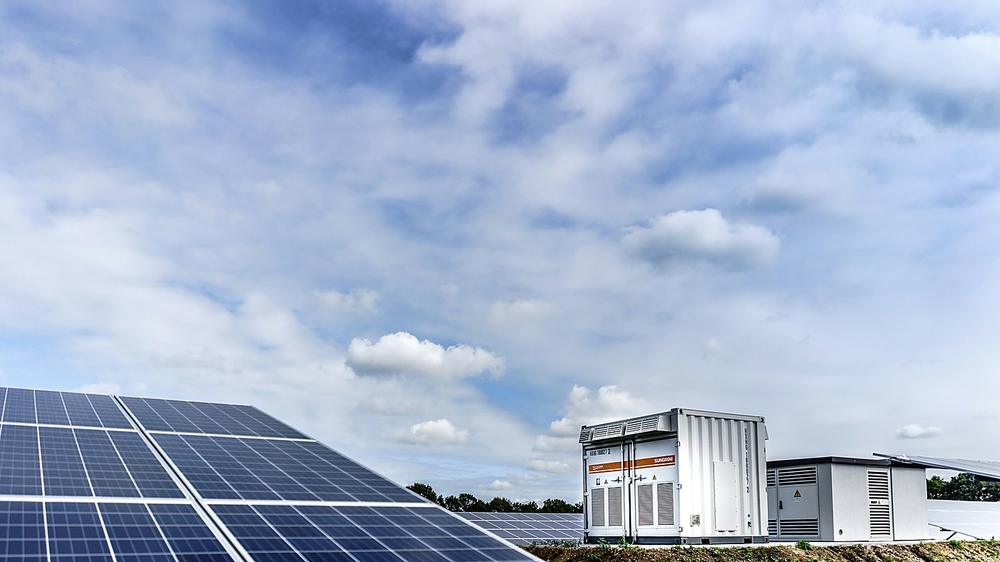
Rooftop and ground mount, from single-site arrays to portfolios spread across many meter points.

Wind
Onshore and offshore, including large-scale assets where the offtake is part of the financing structure.
Hydro and AD
Smaller and often post-subsidy generation, where the effort of running a tender is usually repaid several times over.
Emerging
Battery, energy from waste, biochar and pyrolysis projects where the revenue stack needs building as well as selling.
Asset map
A view of the kinds of generation we take to market across Great Britain, by technology and region. Each pin carries the technology and the area; hover to read it.
- Offshore wind, Moray Firth
- Onshore wind, Lanarkshire
- Run-of-river hydro, Highlands
- Onshore wind, Northumberland
- Anaerobic digestion, East Yorkshire
- Rooftop solar portfolio, Greater Manchester
- Onshore wind, Mid Wales
- Battery storage, Norfolk
- Ground-mount solar, Cambridgeshire
- Ground-mount solar, Somerset
- Rooftop solar, Hampshire
Illustrative. Named assets are added only with the owner’s written permission.
Wherever you are in the contract, we can help.
Generators, buyers, and the people advising them. The first conversation costs nothing and usually tells you quickly whether there is anything here.